
What Gloria Steinem Taught Us About Aging on Our Own Terms
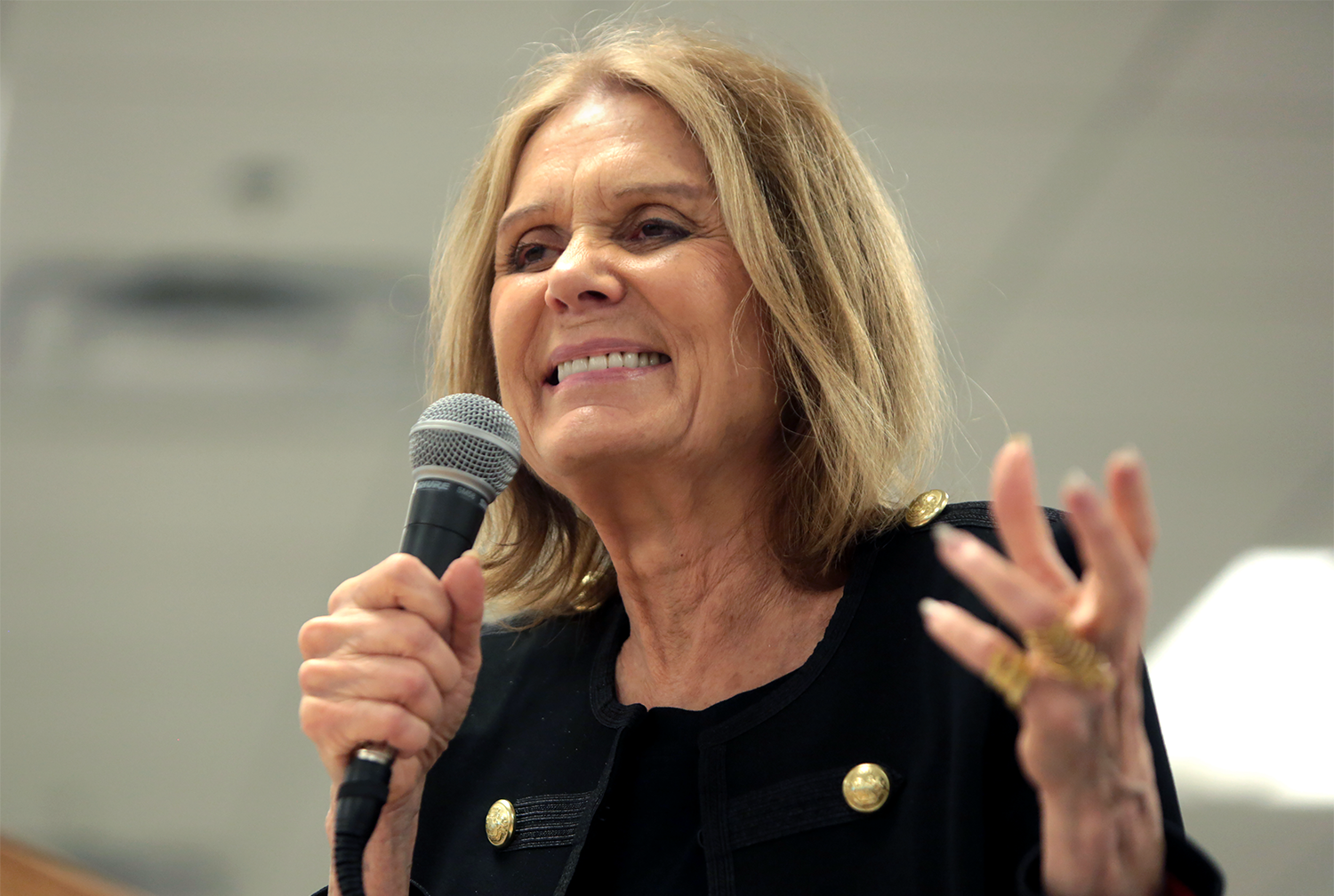
Photo Credit: Gage Skidmore, licensed under CC BY 2.0.
It’s been almost a week, and I'm still reeling from the news that Gloria Steinem has died.
We've lost several cultural icons recently, people whose work I admired and enjoyed. But Gloria was so much more than just a celebrity. Gloria was both an institution and a revolution. Gloria accompanied me on my entire life's journey. I don't remember a time when there was no Gloria.
She was already there when I was growing up in the 1960s, challenging what young girls were told they could be when they grew up and what kind of lives they were allowed to imagine for themselves. She was there as I became a woman, built a career, changed careers, grew older, and eventually entered menopause. And she’s been with me since, inspiring me to think very differently from my grandmother about what it means to be a woman in the second half of life.
And Gloria embodied what it means to redefine aging for women. Those of us who grew up with her remember well the young, soft-spoken feminist icon in the aviator glasses. We remember reading about her Playboy bunny suit and seeing her marching in protests. We remember when she co-founded Ms. Magazine, aligned with Betty Friedan, Bella Abzug, and Shirley Chisholm to co-found the National Women's Political Caucus (NWPC), and campaigned for the Equal Rights Amendment (ERA).
But it’s the older Gloria that I think of now. The woman who continued to write, to speak, to advocate, and to fight, even as she entered her sixties, seventies, eighties, and nineties. I had the privilege of seeing her in conversation with Pulitzer Prize-winning scholar and feminist activist Salamishah Tillet during 2023’s Women’s History Month at Cooper Union in New York City. She looked considerably older and frailer than when I was growing up, but her mind was sharp as a tack, her voice strong and eloquent, and the fire was still burning inside her. And I remember thinking this might be the very last chance I get to see her in person.
One of my core beliefs as a health and wellness coach and advocate for women in midlife and beyond is that while menopause may mark the end of our reproductive years, it does not mark the end of our productive years. In many ways, it can be the beginning of an entirely new and better life. As I reassure women on my website: "Life's not over after menopause. Your best life is just beginning."
Few women embodied that possibility more fully than Gloria Steinem.
In an interview with Allure magazine back in April, Gloria said she felt she was lucky to be old, likening old age for women to childhood, “a time before the expectations of a feminine role.” With age, women have outgrown those expectations, so, as she says, “it doesn’t matter whether you’ve had children or not. It matters less what you look like, so it’s a more free time.”
In her book Outrageous Acts & Everyday Rebellions, Gloria stated that "Women may be the one group that grows more radical with age.” But radical doesn’t have to mean militant, ready to take over the world, although Gloria has joked about that in the past, telling Julia Louis-Dreyfus, on her podcast, Wiser Than Me, “I always think it would be great if an army of gray-haired women could take over the Earth.” And while Gloria’s manner was soft-spoken and gentle, it was her inner strength that allowed her not only to challenge the status quo but to live by the principles she fought for. That strength led many, especially within the male-dominated establishment, which she commonly referred to as “the patriarchy,” to dub her a radical feminist.
The word radical comes from radix, the Latin word for “root” or the fundamental nature of something. Gloria's radicalism sought to change the systems that limited women's choices. But it also meant choosing how she wanted to live her own life, regardless of society’s expectations. Even her style of dress reflected her radical belief that women should not be objectified or sexualized. As she told Allure magazine, “This inhuman system of exploitation will change, but only if we force it to change, and force it together.” Although she thought miniskirts looked great, she felt they were “kind of sexualized” and tended to wear pants, probably, as she herself suggested, as a way of “fighting to be taken seriously.”
One of the opportunities for women in postmenopause is finally learning to live life on their own terms. That may be as dramatic as leaving a career or relationship that no longer works, starting a new career at 55, 65, or even 85, or going on a world cruise by yourself. But it just might be as simple as caring less about what other people think. That doesn’t mean becoming militant or angry or hostile, but it could mean refusing to make yourself look younger just to please others, prioritizing your health and wellness after years of sacrificing for others, being unwilling to compromise your boundaries, going back to school in your sixties, taking up a new hobby, or just becoming the person you might have been had you not spent decades trying to be the woman you were “expected” to be.
What is considered “radical” for one person may not be right for someone else. And that’s okay. Here too, we women have earned the right to define what radical means for us. And we have also earned the right to change our views over time. As Gloria herself wrote when she shocked the world at age 66 with her announcement that she was getting married, “Feminism is about the ability to choose what’s right at each time in our lives.”
So the next time you have the desire to do something for yourself or do something you are truly passionate about, don’t let society’s expectations of women guide you. Ask yourself, “what would Gloria do?” Most likely, she would already be taking that class, booking that solo cruise, or writing that book.
For the first time in my life, Gloria Steinem is not here for me. But perhaps one way we can all honor her is by continuing to question what is expected of us, choosing for ourselves what comes next, and becoming a little more radical with age. Oh, and maybe pre-ordering her new book, An Unexpected Life, due out on September 22nd.
If you're ready to live a little more radically in the second half of your life, or you'd like to bring one of my workshops to the women in your organization or community, book a free discovery call. And if you'd like to read more articles like this one, sign up for my free newsletter.
The information in this article is intended for educational purposes only and is not a substitute for medical advice. Nothing in this article is intended to diagnose, treat, prevent, or cure any disease. Always consult with your healthcare provider before making any dietary, lifestyle, or supplement changes, and do not forego, delay, or disregard medical advice based on the content shared in this article. Please consider your personal situation and individual needs and do your own research.
SOURCES
Video Interview with Gloria Steinem - Allure Magazine on Facebook.
Merriam-Webster’s Dictionary - Merriam-Webster Incorporated, Springfield, MA, 1997.
Why Gloria Steinem’s marriage was so shocking - USA Today.
Julia Gets Wise with Gloria Steinem - Wiser Than Me™ with Julia Louis-Dreyfus, podcast, May 29, 2024.